A Link to the Twilight Princess
|
This article contain spoilers for:
The goal of this article is not to establish a time line for the Zelda games. I tried doing that and failed because I simply could not fit A Link to the Past (aLttP) anywhere between the existing games. Instead, what I managed to do was to fit Twilight Princess (TP) somewhere, and since this is the Zelda franchise we are talking about, I’m proud of my achievement. After finishing TP, I honestly had no idea on how to fit it into the storyline, considering certain aspects of its story contradicts other games. Below I’ll try to fit TP in a way I can eliminate as many plot holes as I can – then you see if you support my conclusion or not.
The 2 Laws of Time TravelBefore we start, I wanted to make sure you guys are familiar with the two rules, or theories, of time traveling: the Terminator Rule and the Back to the Future Rule. 1. The Terminator RuleJust like in the Terminator movies, this law involves the idea of destiny and that you cannot change it. In the movie, there is a war between the rebels and the evil computer. The evil computer sends a robot to the past (the Terminator) to kill the future mother of the rebels’ leader. However, by doing that, it started a chain of events that actually was what allowed the leader to born in the first place. Therefore, by this law, nobody can change the present by altering the past. By using this law, there is necessarily only a single timeline in the Zelda games. In Ocarina of Time, Link would have defeated Ganondorf in the future and then disappeared while the present version of Ganondorf starts breaking havoc in Hyrule… only to be defeated by Adult Link 7 years later. Then Adult Link would return to the past, become Child Link again, and actually witness the downfall of Hyrule into Ganondorf’s hand because, like in the Terminator movies, one cannot dodge fate. 2. The Back to the Future Rule
Here, every time we change the past, we alter the future. Just like in the first Back to the Future movie, where Martin goes to the past and ruins the moment his parents met each other, thus affecting the future he is from and placing him under the risk of disappearing! In this law, time is like a tree: branching out into various possible alternative futures. By using this law, there are 2 endings in Ocarina of Time (plus countless more if you consider that each time Link went to the past in Majora’s Mask and Oracle of Time). One ending results with Ganon sealed in the future and the other with Link and Zelda meeting at the Castle Garden before Ganondorf touched the Triforce (if it was after Ganondorf touched the Triforce, Zelda would have fled the castle with Impa, which would contradict the final scene of OoT). Why do people like to split the timeline?There are no rights or wrongs in here. We split the timeline simply because there are too many plot holes in the Zelda franchise. The more we split the games’ timelines the more each game will look independent from each other – and the more independent they get the easier it becomes to simply dismiss the franchises’ plot holes. Ocarina of Time only suggests there could be 2 timelines, but there could be way more. A 3rd possible timeline could take place in one of the multiple branches from Majora’s Mask in which the crash of the moon happens. In this 3rd timeline, Link never returns (and neither does his descendants) to Hyrule thus allowing for Ganondorf to break free and Hyrule to be flooded. Wind Waker, therefore, could be in an isolated timeline altogether. Chit chat is over. Let’s get to the point:
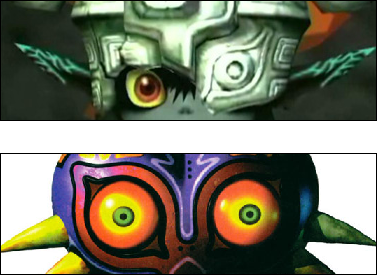
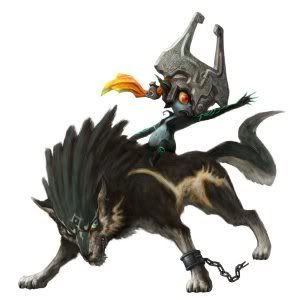
Some aspects of story in TP specifically annoyed me. Ganondorf seemed like he was thrown at the last minutes for the game never once directly mentions the events of Ocarina of Time. But even worse is that Zant had the potential to be an awesome villain just by himself. The Midna/Zant relationship could open new possibilities to the franchise… a potential lost when they decided to throw Ganondorf in there. And and started re-telling the same story A Link to the Past did, in which Ganon uses a puppet to control Hyrule. Considering we have previously witnessed an amazing intro in the Wind Waker, the fact there were so few references to OoT was very annoying. But there were references. Two of them, in fact. Had there not been any, we could easily set TP apart and treat it as an independent Zelda game the same way The Minish Cap and Link’s Awakening are. Those two direct references were the picture of the Fisherman in the Fishing Lake and the Temple of Time. All the other references are too undistinguished. Just play the game again and you will be surprised: it doesn’t contain the word Triforce at all! They talk about goddess powers, but that’s it. Neither the Hero of Time is mentioned in TP. Instead they talk about a more generic legendary hero. Why, those references are so pedestrian that if it weren’t for the fisherman picture and the Temple of Time, I could have easily assumed that the game is a sequel of The Minish Cap (that also contains a goddess power in the form of the Minish Light and a legendary hero), not Ocarina of Time. Next, let’s take a look of what is coherent and what is not with the other Zelda games. What is Coherent in the Twilight Princess?A. The Master SwordTwilight Princess serves as a bridge between Ocarina of Time and A Link to the Past because it explains how the Master Sword ended up in Lost Woods (although I still cannot place aLttP after TP due to other factors). B. What happened to Gerudos and SheikansTwilight Princess also explains why Gerudos and Sheikans cannot be fond in the older games. The Gerudos apparently disbanded and joined the rest of society – the bar owner Telma is hinted to be a Gerudo descendant (the ear phenotype difference between Gerudos and Hylians could be explained by miscegenation) – meanwhile the Sheikans are either still in hiding or will go extinct after Impaz pass away. C. The Hyrulean Equivalent of the Majora TribeIn the game Majora’s Mask, everything in Termina is derived from Hyrule. Even Tingle was originally the Terminean version of Link. The final mystery from Majora was what was the Majora Tribe equivalent in Hyrule? The Gerudos? Ganondorf? No, the equivalent is the Twili tribe. Consequentially, the Fused Shadows is the parallel for the Majora’s Mask itself – a head accessory that unlocks tremendous power. Also notice how the mutated Midna resembles Majora’s Incarnation. It was good that Aonuma decided to make the Twili’s magic resemble the magic from Majora’s tribe. It was one of the few mysteries TP answered instead of complicating even more.
And What is Not Coherent?Ah… here things get sticky! A. Why there were no mentions of a Hero of Time?Wind Waker supposedly took place after a longer period of time from Ocarina than TP did and yet people still refer to the Hero of Time in that game but not in TP! Could the Legendary Hero mentioned in TP be completely unrelated with OoT’s Hero of Time (Adult Link)? B. Why do Sages try to seal Ganondorf in the Twilight Realm in the first place?In all the other games, Ganondorf ends either dead of sealed away. So why would the Sages go through the trouble of bring him back just to lock him somewhere else? Besides, how could the Sages not be aware that Ganondorf was blessed with the chosen power of the gods? Aren’t they Sages!? That stuff Sages are supposed to learn in Hyrulean Hystory 101! C. Lastly, why does Ganon not recognize the Link archetype in TP?In Wind Waker, we see an older Ganondorf that instantly recognizes Link’s green tunic and the Master Sword. However, the younger Ganondorf in TP does not. Instead, he does the complete opposite. He acts as if he never seen anyone wearing that tunic before! As you could see, the Ganondorf from Twilight Princess appears to be a completely different from the Ganondorf we faced in Wind Waker. So, what if they were different? Alas, different versions? This Article is now reaching CRITICAL MASS!
There is only one scenario that allowed me to explain all these questions. In this scenario, there was never a Hero of Time, Ganondorf was never sealed, never fought Link nor invaded the Sacred Realm, and therefore, never touched the Triforce. That scenario is the ending of Ocarina of Time for Child Link, if you consider a split timeline and the Back to the Future rules. In that ending, Adult Zelda sends Link further back in time: Ganondorf was still inside the Castle pledging allegiance to the King and Zelda has not fled the castle yet. Now, assume the children were able to warn the Kind and avoid all the rest to occur. Which means that Ganondorf is arrested before he could invade the Sacred Realm, touch the Triforce or even fight Link (who was probably in his adventure in Termina by then)? If the Ganondorf we fought in TP was this one, then all the questions are explained.
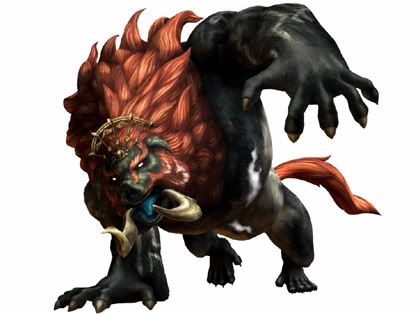
Which brings me to the main claim of this article: Ganondorf does not have the Triforce in Twilight Princess. What what? Yeah, that’s right! In TP, he doesn’t have the piece of power or the actual Triforce! Remember what was said when you first meet the sages and Ganondorf is mentioned for the first time: “He was the leader of a band of thieves who invaded Hyrule in the hopes of establishing dominion over the Sacred Realm. Yet… By some divine prank, he, too, had been blessed with the chosen power of the gods. His abiding hatred and lust for power turned to purest malice…Perhaps that evil power has been passed on to Zant…” Notice how while Ganondorf had hopes of establishing dominion over the Sacred Realm, it’s never stated whether he actually succeeded. Notice that he had been blessed with the chosen power of the gods, but wasn’t Link also chosen? Remember there is also no reference in TP to whether or not Ganon had the Triforce before the game started. In fact, the very word Triforce isn’t uttered at all! Oh yeah? What about the Triforce on his hand? The Triforce in his hand only means he was chosen by the gods, not that he has the Triforce. The proof is in Zelda II: The Adventure of Link, where Link, in the beginning of the game, receives the same mark at his 16th birthday – but he only collects the Triforce of Courage at the very end of the game. Oh yeah? OH YEAH? But Ganondorf needs at least one piece of the Triforce to transform into Ganon! What about that? And who’s to say that Dark Beast Ganon in TP is actually the Triforce transformed beast? Remember that in TP, Link can also transform into a into a Dark Beast (the wolf) and you never know if he truly have the Triforce of Courage! Considering Ganondorf has Twili-like powers (as shown when Ganondorf turns into Twilight matter and possesses Zelda’s body) and was also chosen by the goddesses, the Dark Beast Ganon could simply be that Ganondorf transformed himself into an animal – in his case, a boar of sorts – the same way Link does. Also note that Dark Beast Ganon has white markings along his sides and arms (the scar made by the Sages excluded) that almost exactly mimic those Link possesses in wolf form.
In the end, we can in no way conclude Ganondorf had the Triforce in TP. This absence, however, allows us to explain many of the game’s incoherences. What do you think? |




3 Comments